
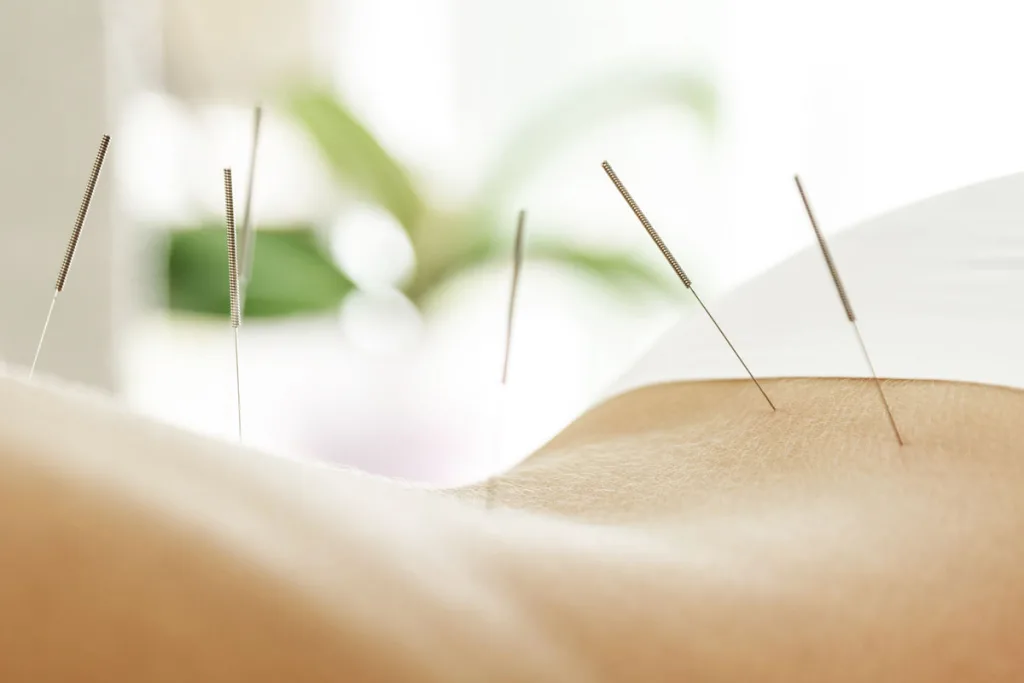
If you’ve been exploring treatment options for pain relief or injury recovery, chances are you’ve come across both acupuncture and dry needling. And if you’ve asked different providers about the difference between the two, you’ve probably gotten completely different answers. Some will tell you they’re entirely distinct therapies. Others will insist they’re essentially the same thing. A few might even bring up safety concerns or scope of practice debates.
So who’s right?
The honest answer is: it’s complicated. In this post we’ll break down the key terms, techniques, and history behind both therapies — and yes, we’ll wade into the politics too — to give you the clearest, most balanced answer possible.
Note: Dry needling encompasses a growing range of neuromusculoskeletal applications, but for the purposes of this post we’ll be focusing specifically on its most established use: the treatment of trigger points. This is where the comparison with acupuncture is most direct and most relevant.
First, Let’s Define Key Terms
Before we can compare acupuncture and dry needling, it helps to understand a few foundational concepts.
What Are Trigger Points?
Trigger points are hyper-irritable spots found in various soft tissue structures throughout the body, including muscle, fascia, and ligaments. They fall into two categories: ¹
- Active trigger points are spontaneously painful and can create both localized pain and referred pain that radiates to other areas of the body
- Latent trigger points can also produce local and referred pain, but unlike active trigger points they are not painful unless compressed or stimulated ²
Trigger points are a common feature in both acute and chronic pain conditions, often functioning as either a primary source of pain or a secondary contributing factor.
Why Is It Called “Dry” Needling?
The term dry needling has a surprisingly simple origin. Early practitioners used standard hypodermic needles — the same type used for injections. When a substance is injected through these needles it’s considered “wet.” When no substance is injected and the therapeutic effect comes from the needle insertion itself, it’s “dry.” ³ Over time, practitioners shifted away from hypodermic needles toward the thinner, solid filiform needles used in acupuncture — but the name stuck. ⁴
What Is Ashi Acupuncture?
In Chinese medicine, the term ashi (阿是) loosely translates to “that’s it!” or “ah yes!” — referring to the reaction a patient has when a practitioner palpates a particularly tender or reactive point. ⁵ Unlike traditional acupuncture points, which exist at fixed anatomical locations, ashi points are entirely palpation-based. The practitioner feels the body, identifies points that either reproduce or relieve the patient’s symptoms, and needles those locations directly. Sound familiar?
The Technique: More Similar Than You Might Think
Whether you’re talking about dry needling or ashi acupuncture, the fundamental clinical approach is remarkably consistent:
- Identify the problematic structures through patient history, symptom presentation, and physical examination
- Palpate the tissue to locate and isolate the trigger point or ashi point
- Needle the identified location, typically producing a local twitch response in the affected muscle
This local twitch response — that involuntary muscle contraction you feel during needling — is considered both a diagnostic confirmation that the right point has been located and a key part of the therapeutic mechanism.
How Does Needling Trigger Points Actually Help?
Several mechanisms have been proposed to explain why needling trigger points produces clinical benefits:
- Nervous system desensitization: Needling reduces the sensitivity of the nervous system, raising the threshold at which pain and symptoms are triggered ⁶
- Improved microcirculation: Needling promotes localized changes in blood flow, increasing oxygen delivery to affected tissues ⁷
- Inflammatory clearance: The mechanical stimulation of needling helps flush out accumulated inflammatory mediators such as substance P, CGRP, and various cytokines in the tissue ⁸
- Tissue normalization: With repeated treatment, these mechanisms work together to gradually restore normal tissue function and reduce trigger point reactivity ⁹
The History: Where Did These Techniques Come From?
This is where the story gets interesting — and where a lot of the confusion begins.
Trigger Points Through History
One of the most important things to understand is that trigger points are not a modern discovery, nor are they culturally specific. The phenomenon of hyper-irritable pain points that produce local and referred symptoms appears across medical traditions worldwide. Chinese medicine was among the first to formally document it, but similar concepts show up across cultures throughout history wherever practitioners were carefully observing and treating pain.
The Roots of Ashi Needling
Within Chinese medicine specifically, the concept of ashi point needling was first formally described in the 7th century by the renowned physician Sun Simiao in his masterwork Qianjin Yaofang (Prescriptions Worth a Thousand Gold), printed in 652 AD. ¹⁰ His work codified what practitioners had likely been doing intuitively for much longer, and ashi needling has remained a recognized component of acupuncture theory and practice ever since.
The Origins of Modern Dry Needling
Fast forward to the early 1980s. Dr. Janet Travell, building on earlier work by Dr. John H. Kellgren, ¹¹ developed the foundational research on the pathology, identification, and treatment of myofascial trigger points. This body of work — culminating in the landmark 1983 publication Myofascial Pain and Dysfunction: The Trigger Point Manual — laid the scientific groundwork for modern dry needling ¹² and was framed entirely within a Western biomedical model, with no reference to Chinese medicine or acupuncture theory.
The Collision Course
By the mid-1990s through the early 2000s, dry needling had gained significant traction, particularly among physical therapists. As adoption grew, practitioners made a practical shift: they moved away from hypodermic needles and began using filiform needles — the same thin, solid needles used in acupuncture.
This is where things got contentious. Acupuncture professional organizations began pushing back, arguing that physical therapists and other non-acupuncturist providers were practicing acupuncture without adequate training. What followed was a wave of legal and legislative battles across the United States that created a lasting and often bitter divide — between acupuncturists and physical therapists, and between acupuncture and dry needling as distinct professions and practices. ¹³
The Controversy: Why Is This Still So Confusing?
From my perspective, there are three primary reasons this debate remains unresolved and confusing for patients.
1. Legal Distinctions Drive Clinical Definitions
The professional and legislative disputes between acupuncture and physical therapy organizations created a practical need for a legal distinction between dry needling and acupuncture — regardless of whether a meaningful clinical distinction actually exists. This is best illustrated by looking at countries where these turf battles haven’t occurred: in many parts of the world, the line between acupuncture and dry needling is far less defined because it was never forced into a legal framework. ¹³
2. Inconsistent Acupuncture Education Standards
While ashi needling is an established component of Chinese medicine, the emphasis placed on it varies dramatically across acupuncture schools in the United States. Some programs dedicate significant time to its clinical application. Others treat it as a minor footnote. This inconsistency has made it difficult to establish a unified professional position on how acupuncture and dry needling relate to each other.
3. The Energetic Medicine Narrative
Acupuncture is frequently portrayed — both within and outside the profession — primarily as an energetic medicine based on concepts like Qi and meridians. While these frameworks have clinical value within Chinese medicine, this framing has made it easy for dry needling practitioners to argue that they are doing something categorically different. After all, a physical therapist treating a trigger point in the upper trapezius isn’t working with Qi — they’re working with a myofascial pain pattern. The overlap in tools and technique gets overshadowed by the difference in conceptual framework.
So What’s the Takeaway?
Here’s the honest truth: for most patients, the debate over whether a technique is called “acupuncture” or “dry needling” matters far less than whether the person holding the needle is skilled, thorough, and focused on your specific goals.
Both acupuncture and dry needling, when performed by a competent and well-trained provider, can be highly effective tools for pain relief, injury rehabilitation, and performance optimization. The terminology is largely a product of professional politics and legal distinctions — not necessarily a meaningful difference in what’s happening at the tissue level.
Finding the Right Provider for You
Rather than getting caught up in terminology, focus on finding a provider whose training, approach, and philosophy align with what you’re trying to accomplish. Here are a few questions worth asking:
- What are your outcome goals? Are you trying to get out of chronic pain, recover from a specific injury, improve athletic performance, or all three? Different providers specialize in different areas. Make sure your provider has a clear track record with your type of case.
- Do they use a multi-modal approach? Needling alone — whether you call it acupuncture or dry needling — is rarely the whole answer. The best outcomes typically come from providers who combine needling with manual therapy, movement rehabilitation, and patient education.
- Are they focused on your self-reliance? A great provider isn’t trying to keep you coming back forever. They should be actively working to give you the tools, exercises, and knowledge to maintain your progress and prevent reinjury on your own.
- Do they listen and adapt? Every patient responds differently. If your treatment plan isn’t evolving as your symptoms change, that’s a red flag. Look for someone who reassesses regularly and adjusts their approach accordingly.
- What is their training background? Ask about their credentials. A licensed acupuncturist has completed a graduate-level program with extensive clinical hours. A physical therapist or other provider performing dry needling should have completed a recognized post-graduate certification program. Either can be excellent — training depth and ongoing education matter more than the letters after their name.
The bottom line: don’t choose a therapy — choose a provider.
Find someone who takes the time to understand your full picture: your history, your goals, your lifestyle, and what success looks like specifically for you. Whether they call it acupuncture, dry needling, or something else entirely, that individualized attention is what drives real, lasting outcomes.
At Performance D.N.A. in Richfield, Minnesota, we don’t believe in one-size-fits-all treatment. Every patient receives a thorough evaluation and a personalized plan that evolves as you do. Whether you’re dealing with chronic pain, recovering from a sports injury, or working toward peak performance, we’re here to help you get there — and to give you the tools to stay there.
➤ Ready to take the first step? Schedule your initial consultation today.
Citations & References
Trigger Points — Definition & Background
[1] Simons DG, Travell JG, Simons LS. Myofascial Pain and Dysfunction: The Trigger Point Manual. Vol. 1. Baltimore: Williams & Wilkins; 1983.
[2] Fernández-de-las-Peñas C, Dommerholt J. International consensus on diagnostic criteria and clinical considerations of myofascial trigger points: a Delphi study. Pain Medicine. 2018;19(1):142–150. doi:10.1093/pm/pnx207
Why Is It Called “Dry” Needling?
[3] Lewit K. The needle effect in the relief of myofascial pain. Pain. 1979;6(1):83–90. doi:10.1016/0304-3959(79)90142-8
[4] Legge D. A history of dry needling. Journal of Musculoskeletal Pain. 2014;22(3):301–307. doi:10.3109/10582452.2014.883041
[5] Dommerholt J, Fernández-de-las-Peñas C, Chaitow L, Gerwin RD. Trigger Point Dry Needling: An Evidence and Clinical-Based Approach. Churchill Livingstone/Elsevier; 2013.
Ashi Points & Sun Simiao
[6] Peng Y, Du X. The history and application of “Ashi Points.” International Journal of Clinical and Experimental Medicine Research. 2021;5(4):485–489. doi:10.26855/ijcemr.2021.10.010
[7] Kalichman L, Vulfsons S. Dry needling in the management of musculoskeletal pain. Journal of the American Board of Family Medicine. 2010;23(5):640–646. doi:10.3122/jabfm.2010.05.090296
[8] Sun Simiao. Qianjin Yaofang (Prescriptions Worth a Thousand Gold). Tang Dynasty, 652 AD. [Classical primary source]
Trigger Points & Acupuncture Point Overlap
[9] Dorsher PT, Fleckenstein J. Trigger points and classical acupuncture points: Part 1 — Qualitative and quantitative anatomic correspondences. Deutsche Zeitschrift für Akupunktur. 2008;51(3):15–24.
[10] Dorsher PT. Myofascial referred-pain data provide physiologic evidence of acupuncture meridians. Journal of Pain. 2009;10(7):723–731. doi:10.1016/j.jpain.2008.12.006
[11] Birch S. Trigger point — acupuncture point correlations revisited. Journal of Alternative and Complementary Medicine. 2003;9(1):91–103. doi:10.1089/107555303321222902
Travell, Simons & History of Dry Needling
[12] Travell JG, Simons DG. Myofascial Pain and Dysfunction: The Trigger Point Manual. Vol. 1. Baltimore: Williams & Wilkins; 1983.
[13] Kellgren JH. Referred pains from muscle. British Medical Journal. 1938;1(4023):325–327. doi:10.1136/bmj.1.4023.325
[14] Lewis T. Study of somatic pain. British Medical Journal. 1938;1(4023):321–325. doi:10.1136/bmj.1.4023.321
[15] Travell J, Rinzler SH. The myofascial genesis of pain. Postgraduate Medicine. 1952;11(5):425–434. doi:10.1080/00325481.1952.11694280
Mechanisms of Needling
[16] Fernández-de-las-Peñas C, Dommerholt J. Trigger point dry needling for the treatment of myofascial pain syndrome: current perspectives within a pain neuroscience paradigm. Journal of Pain Research. 2018;11:2089–2098. doi:10.2147/JPR.S154728. Available at: https://pmc.ncbi.nlm.nih.gov/articles/PMC6590623/
[17] Shah JP, Thaker N, Heimur J, et al. Myofascial trigger points then and now: a historical and scientific perspective. PM&R. 2015;7(7):746–761. doi:10.1016/j.pmrj.2015.01.024
[18] Chou LW, Hsieh YL, Kao MJ, Hong CZ. Remote influences of acupuncture on the pain intensity and the amplitude changes of endplate noise in the myofascial trigger point of the upper trapezius muscle. Archives of Physical Medicine and Rehabilitation. 2009;90(6):905–912. doi:10.1016/j.apmr.2008.12.020
[19] Chou LW, Kao MJ, Lin JG. Probable mechanisms of needling therapies for myofascial pain control. Evidence-Based Complementary and Alternative Medicine. 2012;2012:705327. doi:10.1155/2012/705327. Available at: https://pmc.ncbi.nlm.nih.gov/articles/PMC3549415/